
Kettlebell vs Dumbbell: Which Is Better for a Home Gym?
Kettlebell vs dumbbell for a home gym, compared on grip and balance, best-fit exercises, weight steps, storage, floor safety, and beginner fit.

In the kettlebell vs dumbbell decision for a home gym, dumbbells are the more flexible first purchase for presses, rows, curls, and bench work, while a kettlebell is the better tool if you want swings, cleans, and other hip-driven movements from one compact weight. The difference starts with where the weight sits relative to your hand. A dumbbell’s handle runs through its center of mass. A kettlebell’s handle sits outside it, and that one design choice changes how each tool moves, how you add weight over time, and how you store it.
To keep the comparison concrete, we set two real products side by side: the REP Fitness Cast Iron Kettlebell, sold as single bells, and the Yes4All Rubber Hex Dumbbell Pair. Both come from brands we have vetted, and both are sold new on Amazon in the US. Every figure below comes from the maker’s product page or from the Amazon listing when the maker gives none, and we say which. The same questions apply to any dumbbells vs kettlebells choice, so you can use them to judge other models too.
This guide is general product information, not medical or fitness advice. If you have pain, an injury, or a health condition, talk to a qualified healthcare professional before starting a new exercise routine.
We earn a commission from qualifying purchases made through links on this page. Commissions never affect our rankings or StrengthRoomLab Scores.

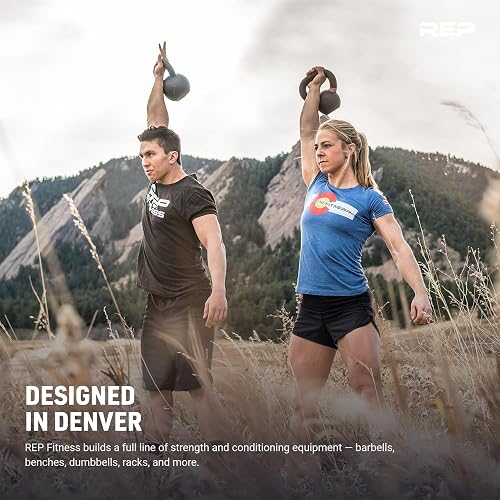
REP Fitness Cast Iron Kettlebell




As an Amazon Associate we earn from qualifying purchases.

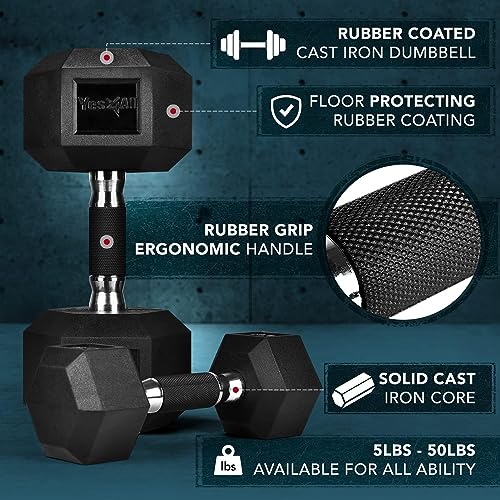
Yes4All Rubber Hex Dumbbell Pair




As an Amazon Associate we earn from qualifying purchases.
Kettlebell vs Dumbbell: Side-by-Side Specs
The source is noted in each cell. Where the listing and the maker disagree, the table uses the maker’s figure and notes the listing’s. “Not confirmed” means neither the listing nor a maker page we opened gives the figure.
| Spec | REP Fitness Cast Iron Kettlebell | Yes4All Rubber Hex Dumbbell Pair |
|---|---|---|
| How it is sold | Single bells, or single and double sets (REP); this listing page is one 16 kg (35 lb) bell | A pair of two dumbbells (listing); the option shown is a 20 lb pair |
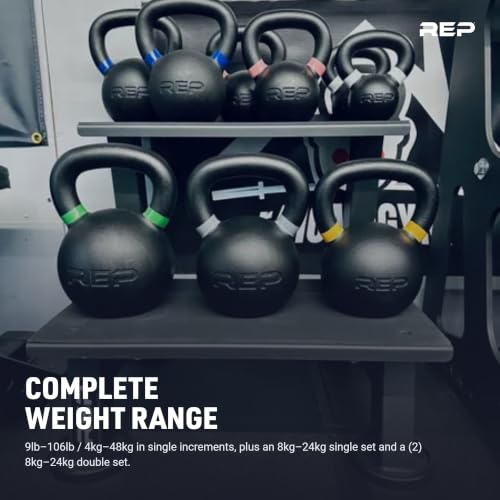
| Weight range | 4 kg (9 lb) to 48 kg (106 lb) (REP) | Pairs from 5 to 30 lb per hand (listing) |
| Size steps | 2 kg steps from 4 to 24 kg, then 4 kg steps up to 48 kg (REP size list) | Not confirmed; the listing gives the 5 to 30 lb range without every option |
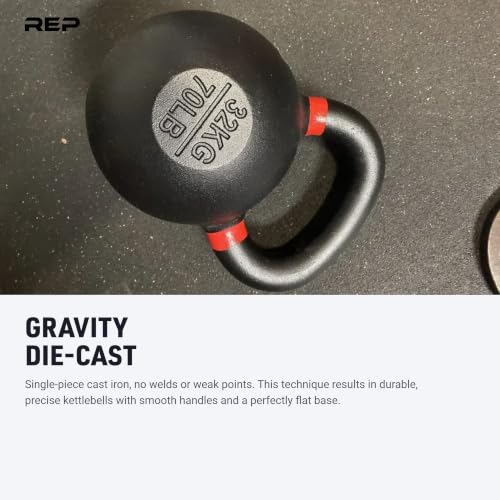
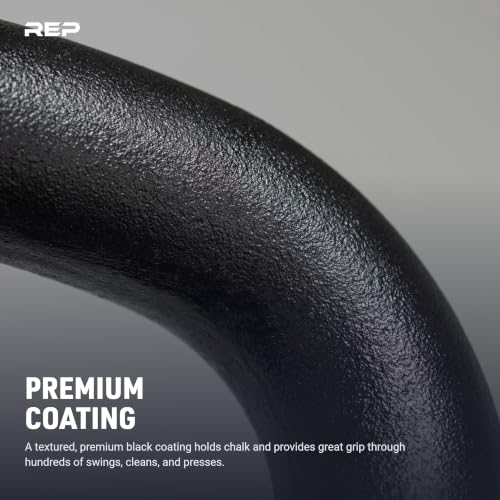
| Construction | Gravity die-cast iron with a textured black coating (REP) | Solid cast iron core inside a rubber coating (listing) |
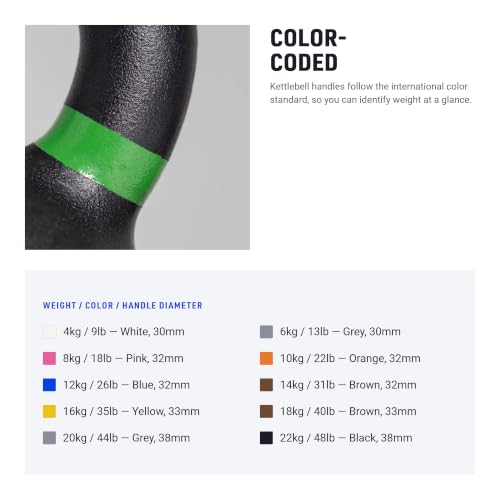
| Handle | 33 mm, about 1.3 in, on the 16 kg bell; 30 to 40 mm across the range (REP); the listing gives 1.25 in | Contoured, textured handle in rubber and stainless steel (listing); diameter not confirmed |
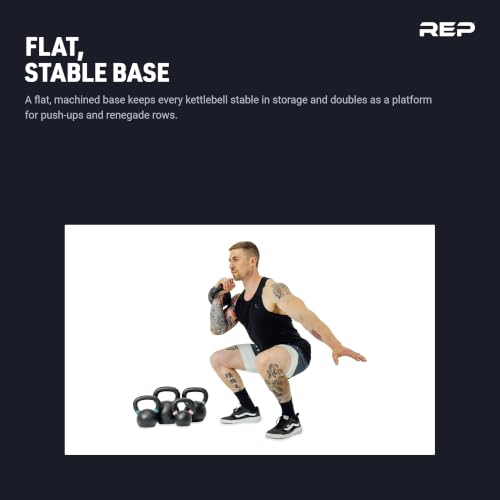
| Base or head shape | Flat base (REP) | Hex heads that resist rolling (listing) |
| Floor contact | Coated iron, no rubber base listed (REP, listing) | Rubber coating the listing says reduces noise and protects floors |
| Weight markings | Kilograms and pounds on each bell; handles color-coded by size (REP) | Not confirmed |
| Warranty | Not confirmed for this listing | 1 year (listing) |
Grip and Center of Mass
This is the root of every other difference. In its article on the two-handed kettlebell swing, the American Council on Exercise (ACE) explains that barbells and dumbbells are gripped between two equal amounts of mass, so the grip point is the center of mass. A kettlebell’s handle sits outside the center of mass, which, per ACE, means you have to produce more muscle force to control the weight, especially during a swing.
In practice, a dumbbell goes where your hand goes. Press it overhead and the load stays stacked over your wrist. A kettlebell hangs below or behind your hand, so in a press it rests against the back of your forearm, and in a swing the bell travels in an arc well away from your grip. That offset is what makes swings and cleans possible, and it is also why a kettlebell can feel awkward on movements built around a balanced load, such as a bench press or a lateral raise.
Handle size matters more on a kettlebell because many movements use both hands on one handle. REP lists a 33 mm handle on its 16 kg bell, rising from 30 mm on the lightest bells to 40 mm on the heaviest. The Yes4All listing describes a contoured, textured handle but does not give a diameter. If your hands are small, check the handle size for the exact weight you plan to buy, since it changes across a kettlebell range.
Which Exercises Suit Each Tool
Both tools cover the basics. Squats, deadlifts, presses, and rows work with either one, and the CDC’s page on what counts as physical activity lists lifting weights among muscle-strengthening activities without naming a preferred tool. The split shows up at the edges.
Dumbbells are the natural fit for work on a bench, for one-arm rows, for curls, and for raises to the front and side. Because you hold one in each hand, they also let you work each side on its own and notice if one arm lags. If you own a weight bench, most of what you do on it will call for dumbbells.
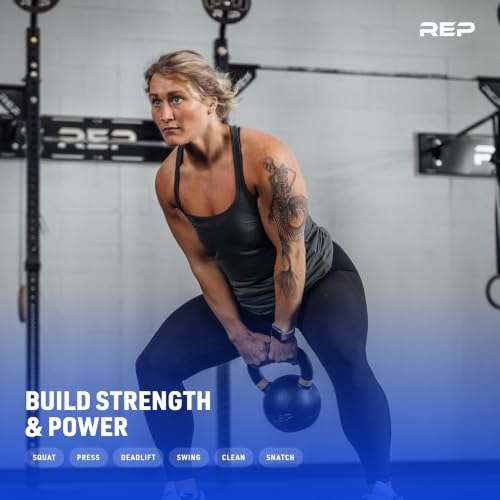
Kettlebells are built for movements where the weight swings or rotates around your hand. According to the Amazon listing, the REP bell suits squats, presses, and deadlifts for strength, then swings, cleans, and snatches, plus core work such as Russian twists and Turkish get-ups. A dumbbell can stand in for some of these, but the swing in particular is where the kettlebell’s shape earns its place. ACE describes the swing as a horizontal movement driven by a hip hinge, with the hips moving forward and back rather than up and down as in a squat.
If you plan to train mostly on a bench and want to isolate muscles, start with dumbbells. If you want short full-body sessions built around swings and goblet squats with one weight, start with a kettlebell.
Weight Steps and Progression
Kettlebells are usually sized in kilograms, and the steps between sizes are larger than the steps in a typical dumbbell lineup. REP sells its bells in 2 kg steps from 4 to 24 kg, about 4 to 5 lb each, then in 4 kg steps, about 9 lb each, up to 48 kg. Each REP bell is marked in both kilograms and pounds, and the handles are color-coded by size, so a mixed collection stays easy to sort.
Dumbbell lineups can move in finer steps at the light end. CAP, for example, lists its neoprene coated dumbbells in every pound from 1 to 10 lb, plus 12 and 15 lb. The Yes4All pairs here run from 5 to 30 lb per hand, according to the Amazon listing. Small steps matter most on shoulder presses and raises, where a jump of several pounds can be the difference between finishing a set with good form and not finishing it.
The other factor is how many pieces you need. REP notes that you can do many exercises with just one kettlebell, and that a second bell of the same weight opens up double swings, squats, and presses. Dumbbells, by contrast, are mostly used in pairs, so each new weight usually means two pieces, not one. A home gym that grows one kettlebell at a time adds fewer items than one that grows a pair at a time, but each kettlebell step is a bigger jump.
Space and Storage
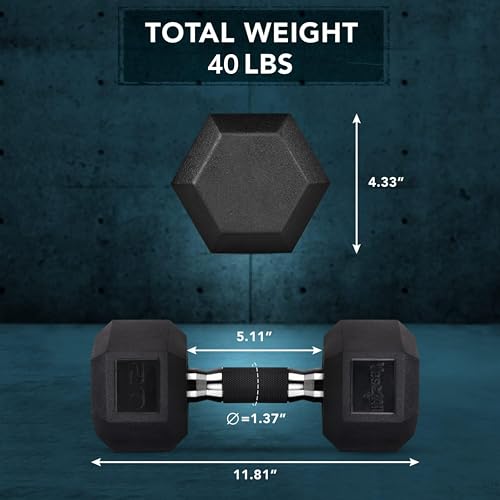
Both tools are small. The REP bell stands upright on its flat base, so a row of kettlebells can line a wall or sit on a low shelf. The Yes4All dumbbells have hex heads, which the listing says prevent rolling and make storage easier. For a sense of size, Marcy lists its 30 lb cast iron hex dumbbell at 11.81 in long, so a pair of mid-weight hex dumbbells takes up about the same shelf length as a couple of kettlebells.
Storage is where the two are similar. Training space is where they differ. A dumbbell workout needs room for your arms and a bench if you use one. A kettlebell swing needs a clear lane in front of and behind you, because the bell travels out to about shoulder height and back between your legs. As general advice, keep that lane clear of furniture, glass, screens, children, and pets, and check ceiling height before any overhead work. In a spare bedroom or a one-car garage bay, that swing lane usually decides where the kettlebell work happens.
Floors, Noise, and Safety
Floor protection is the clearest product difference in this pair. The REP bell is coated iron with a flat iron base, and neither REP nor the listing describes a rubber bottom. The Yes4All dumbbells sit in a rubber coating that, per the listing, is meant to cut noise and protect floors. On a wood floor, tile, or a concrete slab, put a mat under any kettlebell and set it down rather than letting it drop. In an upstairs apartment, a rubber-coated dumbbell set down gently is the quieter option of the two.
Safety comes down to form and weight choice more than to the tool. ACE stresses that proper form is essential for reducing the risk of injury in dynamic exercises such as the swing, and advises choosing a weight that lets you keep good form for the whole set. It names two common mistakes when learning the swing: squatting instead of hinging at the hips, and lifting the bell with the arms and shoulders instead of letting the hips drive it. With dumbbells, as general advice, practice each new lift with a lighter pair first and keep your feet clear when you set the weights down.
When we searched the CPSC’s downloadable recall list for this comparison, it showed no kettlebell or dumbbell recalls under REP Fitness or Yes4All. Recalls can be added at any time, so search it for your exact product before you buy.
Which Is Easier for a Beginner?
Dumbbells are easier to start with because the core movements are familiar ones: press, row, curl, squat. You can learn each lift slowly with the load balanced in your hand. The kettlebell swing has a learning curve. ACE says the first step in teaching it is the hip hinge, and that some people pick up the movement in a few repetitions while others need longer. If you want kettlebell work in your routine, consider a session or two with a certified trainer before you add weight, and keep early sessions to slow, controlled movements such as deadlifts and goblet squats.
Weight choice is also simpler with dumbbells at first, because light pairs come in small steps. If you are unsure what size kettlebell to start with, choose lighter rather than heavier and move up only when your form holds through every rep.
Which Should You Buy?
- Buy dumbbells if you have or plan to buy a bench, you want to train each side separately, you want small weight steps for shoulder work, or you live upstairs and want rubber-coated weights. The Yes4All Rubber Hex Dumbbell Pair fits that use, with pairs from 5 to 30 lb per the listing.
- Buy a kettlebell if you want swings, cleans, and goblet squats, you like short full-body sessions with one weight, and you have a clear lane on a protected floor. The REP Fitness Cast Iron Kettlebell comes in sizes from 4 to 48 kg per REP, marked in both kilograms and pounds.
- Buy both, in stages, if you want a complete small home gym. A pair of dumbbells for bench and isolation work plus one kettlebell for swings covers most basic movements without filling the room.
- You should look elsewhere if you need heavy pairs above 30 lb per hand, since the Yes4All pairs stop there; if you cannot protect your floor from a bare iron base; or if you want one tool that changes weight in seconds, in which case look at adjustable or fixed dumbbells as a separate decision.
Why You Should Trust Us
We do not conduct our own product trials; our picks draw on published specifications, independent reviews, and Amazon owner ratings, which also set each product’s StrengthRoomLab Score. For this comparison we read both Amazon listings in full, checked the kettlebell against REP’s product page, and drew the movement and safety points from ACE and the CDC pages linked above. Where a listing and a maker disagree, we say so. Commissions never affect which products we cover or how we score them. The full method is on our How We Review page.
FAQ
Are kettlebells better than dumbbells?
In the kettlebells vs dumbbells question, neither is better overall. Dumbbells are better for bench work, isolation lifts, and small weight steps. Kettlebells are better for swings, cleans, and other movements where the weight travels around your hand. Pick the one that matches the exercises you plan to do most, and add the other later if your routine grows.
How do you use a dumbbell as a kettlebell?
For slow movements such as goblet squats and deadlifts, hold a fixed dumbbell upright by one head or by the handle and keep it close to your body. Swinging a dumbbell is less forgiving, because the head can strike your forearms or legs and the grip is less secure, so go lighter, keep the movement small, and stop if the weight shifts in your hands. Never swing an adjustable dumbbell unless its manual allows it: recall notices on the CPSC list linked above describe plates dislodging from the handle during use on several adjustable models.
Are kettlebells heavier than dumbbells?
Not on a scale. A 16 kg kettlebell weighs about 35 lb, the same as a 35 lb dumbbell. It can feel heavier in some movements because its handle sits outside the center of mass, which, per ACE, takes more muscle force to control. Kettlebells also come in bigger steps, so the next size up is often a larger jump than the next dumbbell.
Should a beginner buy dumbbells or kettlebells first?
For a new lifter, dumbbells are usually the simpler first buy. The movements are familiar, light pairs come in small steps, and rubber coatings are easier on floors. A kettlebell makes sense first if swings are the main reason you want to train at home and you are willing to learn the hip hinge before adding weight.
Do kettlebells and dumbbells need different flooring?
They need the same kind of protection, but a bare iron kettlebell needs it more. Put a rubber mat under the area where you set weights down, and never let either tool drop onto wood, tile, or vinyl. Rubber-coated dumbbells like the Yes4All pair add a layer of protection, according to the Amazon listing, but they still need a mat on a finished floor.
Final Verdict
Choose by the exercises you will do and the room you have. If your plan centers on a bench, presses, rows, and steady small increases in weight, start with a pair of dumbbells like the Yes4All rubber hex pair. If you want swings and full-body sessions with one compact weight and you can clear a lane on a protected floor, start with a kettlebell like the REP cast iron bell. If you settle on kettlebells, finding the best kettlebells for your space comes down to handle size, finish, and the step between sizes. Browse our kettlebells category for more models we have researched.
About the author
Julio Frazier has spent six years training with free weights, combining gym-based strength workouts with kettlebell and bodyweight sessions at home. With two years of experience writing fitness equipment buying guides, Julio researches product specifications, owner feedback, and equipment suitability for different training routines. Julio covers dumbbells, weight benches, kettlebells, and pull-up bars.