
Resistance Bands vs Weights: Which Is Better for a Home Gym?
Resistance bands vs weights compared on how the load works, progress, exercises, anchoring, storage, durability, and latex, with two real examples.

In the resistance bands vs weights decision, weights are the better fit if you want a load you can read in pounds, add in known steps, and push heavier on squats and lunges, while resistance bands are the better fit if your gym has to fit in a drawer or a suitcase and you can work with tension that changes through each rep. Neither one is a shortcut. Both count as muscle-strengthening equipment, and the two work well side by side in one home gym.
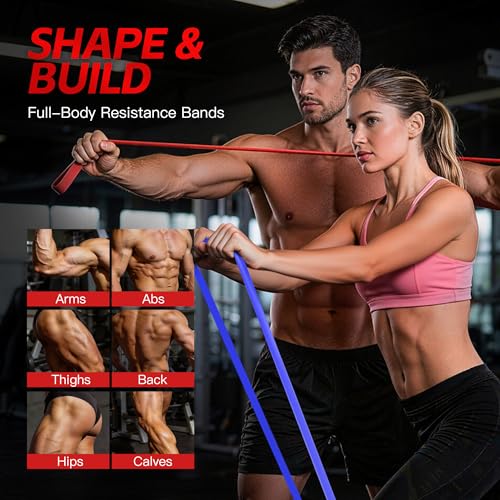
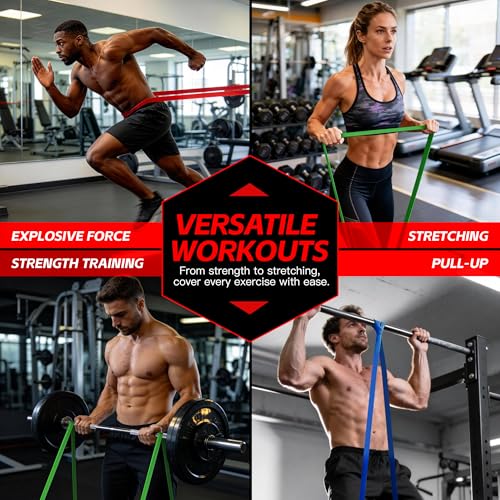
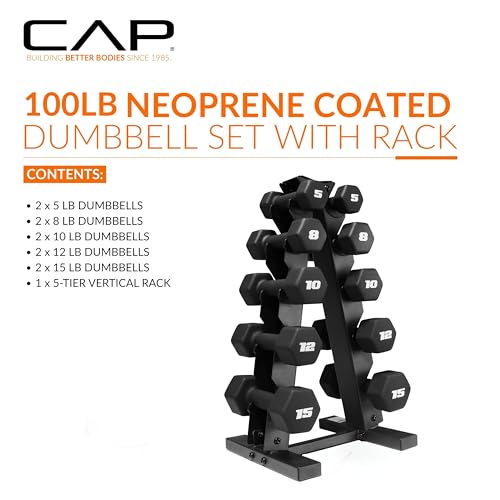
To keep this comparison concrete, we set two real products side by side: the WSAKOUE Pull-Up Band Set, five natural latex long loops, and the CAP Neoprene Dumbbell Set with A-Frame Rack, five pairs of fixed dumbbells on a stand. Both come from brands we have vetted and both are sold new on Amazon in the US. Figures come from the Amazon listing for each product or from the maker’s own pages, and we say which. The same questions apply to any dumbbells vs resistance bands choice, and most of them carry over to resistance bands vs free weights in general, kettlebells and barbells included.
This guide is general product information, not medical or fitness advice. If you have pain, an injury, or a health condition, talk to a qualified healthcare professional before starting a new exercise routine.
We earn a commission from qualifying purchases made through links on this page. Commissions never affect our rankings or StrengthRoomLab Scores.

WSAKOUE Pull-Up Band Set


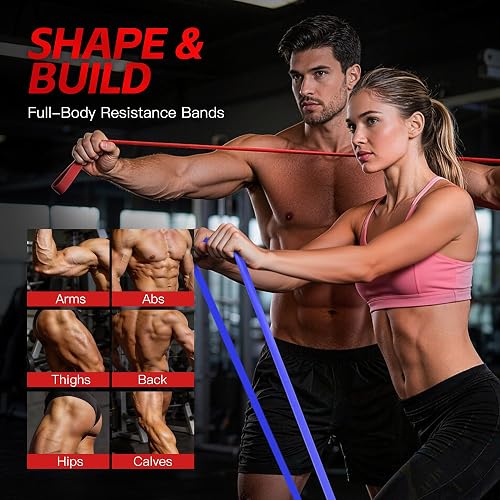




As an Amazon Associate we earn from qualifying purchases.

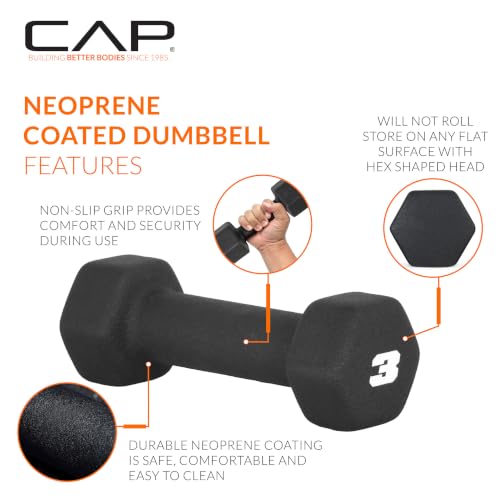
CAP Neoprene Dumbbell Set with A-Frame Rack




As an Amazon Associate we earn from qualifying purchases.
Resistance Bands vs Weights: Side-by-Side
The source is noted in each cell. “Not confirmed” means neither the listing nor the maker’s page gives the figure.
| Spec | WSAKOUE Pull-Up Band Set (bands) | CAP Neoprene Dumbbell Set with A-Frame Rack (weights) |
|---|---|---|
| How the load works | Elastic tension that changes with how far the band is stretched | Fixed weight on every rep |
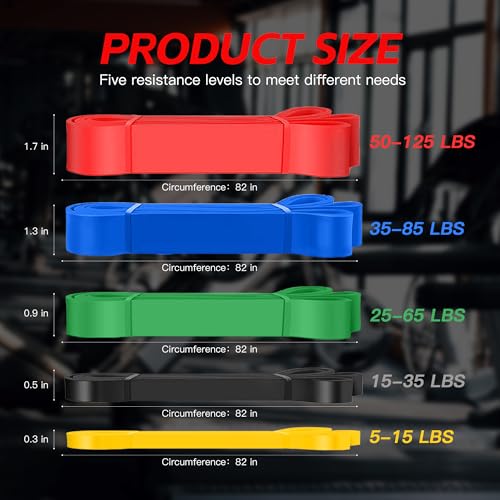
| Listed load | 5 to 125 lb across the set (listing); not broken out by band | Pairs of 5, 8, 10, 12, and 15 lb, 100 lb in total (listing) |
| Number of levels | 5 bands (listing) | 5 pairs (listing) |
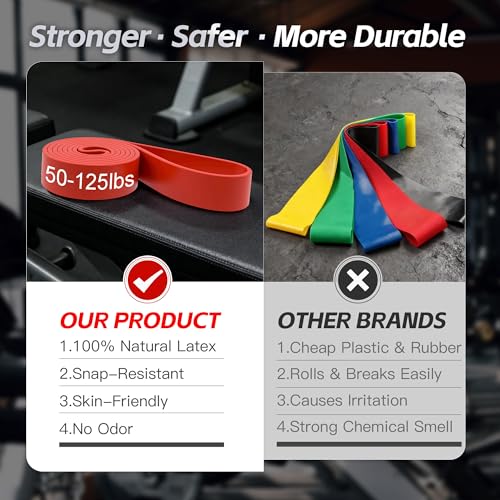
| Material | 100% natural latex (listing) | Neoprene coating over a gray iron core (listing); cast iron per CAP |
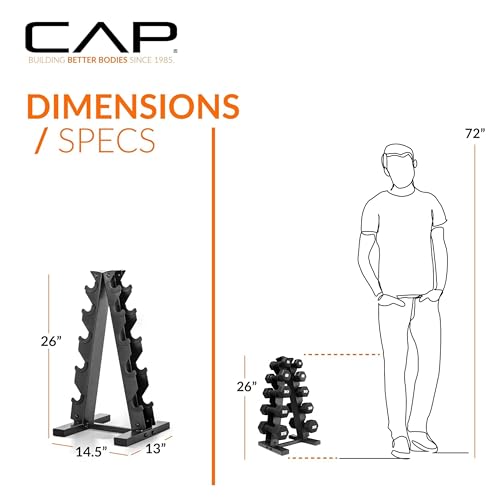
| Listed size | 82 x 2 in, 0.2 in thick (listing) | Rack footprint not confirmed |
| Weight to carry | 1.01 kg, about 2.2 lb, for the set (listing) | 100 lb of dumbbells plus the rack (listing) |
| In the box | 5 bands, storage bag, instruction manual (listing) | 10 dumbbells and an A-frame rack (listing) |
| Anchor needed | For many rows, presses, and pull-downs; no door anchor listed in the box | No |
| Warranty | 1 year (listing) | Not confirmed |
One listing quirk to know: the CAP listing’s item weight field says 12.3 pounds, while its bullets describe 100 lb of dumbbells in the set. The table uses the bullets, which match the five pairs the listing names.
How the Load Works: Stretch vs Gravity
This is the difference that shapes everything else. A dumbbell pulls straight down with the same force from the first inch of a rep to the last. A 10 lb dumbbell weighs 10 lb at the bottom of a curl and at the top, even though the effort you feel shifts as your arm angle changes.
A band works differently. TheraBand’s product page for its latex bands explains that the resistance of a band or tube is based on how far it is stretched. Its example is a 2 ft length of green band pulled to 4 ft, which is 100% elongation and gives 4.6 lb of resistance at that point. Stretch it less and you get less; stretch it more and you get more. So a band is lightest at the start of a row or press and heaviest at the end, where your arms are extended or your elbows are pulled back.
That has a practical side effect: the pound figures on band packaging do not line up with dumbbell pounds. The WSAKOUE listing gives 5 to 125 lb across the set, but it does not say how far a band has to stretch to reach a given figure. A band labeled with a top figure of, say, 50 lb will not feel like a 50 lb dumbbell through a whole rep. Treat band numbers as a way to rank the bands within one set, not as a weight you can compare to iron.
Do Bands Build Strength Like Weights?
Both count. The CDC’s page on what counts as physical activity lists “lifting weights” and “working with resistance bands” side by side as examples of muscle-strengthening activity. It also says these activities should work all the major muscle groups (legs, hips, back, chest, abdomen, shoulders, and arms) and should be done to the point where another repetition is hard without help. Either tool can meet that description if the load is heavy enough for you.
Research comparing the two head to head is limited but points the same way. A systematic review and meta-analysis listed in São Paulo State University’s repository, published in SAGE Open Medicine, compared training with elastic resistance against conventional devices (weight machines and dumbbells). Its conclusion: “Elastic resistance training is able to promote similar strength gains to conventional resistance training,” across different population profiles and protocols. It pooled a small number of trials, and it speaks to strength gains over a training program, not to every lift or every lifter.
The practical catch is load. A band only works as well as the tension you can get from it, and the CAP set stops at 15 lb per hand. Someone who already squats or lunges with heavy dumbbells or a barbell will outgrow a light set of either kind, and long bands get awkward to set up for heavy lower-body work. If your lifts are already heavy, the question is less “bands or weights” and more “how heavy do I need to go.”
Measuring Load and Adding Resistance
Dumbbells make progress easy to read. The CAP set steps from 5 to 8 to 10 to 12 to 15 lb per the listing, so each move up adds 2 or 3 lb per hand, and you always know exactly what you lifted last week. Once 15 lb gets easy for a lift, you need a heavier pair. CAP’s own page for its black neoprene coated dumbbells sells this line in individual pairs up to 15 lb, so going heavier means a different line or a different kind of dumbbell.
Bands give you more ways to adjust and fewer exact numbers. You can move to the next band in the set, and the WSAKOUE listing says you can use bands alone or combine several for more challenge. You can also change how far the band stretches by stepping farther from the anchor, standing on it with a wider stance, or choking up on the loop. The trade-off is record keeping: write down the band color, how many bands you stacked, and where you stood, or next week’s session will not match this one. Band types, lengths, and color labels vary by brand, so learning how to choose resistance bands within one maker’s range is a separate step from deciding between bands and weights.
Which Exercises Suit Each
Gravity only pulls one way, and that decides a lot. Dumbbells load anything where you lift against gravity: goblet squats, lunges, Romanian deadlifts, rows bent over a bench, presses, curls, and raises. They are also simple to start with, since there is nothing to anchor and the weight is the same on every rep.
Bands can pull from any direction you anchor them. That makes them useful for movements dumbbells handle poorly at home, such as straight-arm pull-downs, standing chest flies, face pulls, and rows from a door anchor at chest height. Long loops like the WSAKOUE set are also sold for pull-up assistance, push-ups, squats, bench presses, and shoulder presses, according to the Amazon listing. If you have a pull-up bar, a long loop hung from it takes part of your body weight during band-assisted pull-ups, something a dumbbell cannot do.
Some lifts favor neither. A heavy deadlift or a back squat outgrows both a light dumbbell set and a home band setup, and that is where a barbell or a pair of adjustable dumbbells takes over.
Anchoring, Space, and Storage
Dumbbells need floor space; bands need something solid to pull against. The WSAKOUE listing names five bands, a storage bag, and an instruction manual as the contents, with no door anchor. For rows, presses, and pull-downs you will need a separate door anchor for resistance bands, a sturdy post or rack upright, or a pull-up bar for overhead work. TheraBand’s care and safety page says to make sure a band is securely anchored to a sturdy object and to watch the attachment point throughout the exercise. If you need to tie a resistance band to an anchor, check the band maker’s instructions first, since a knot puts stress on one spot.
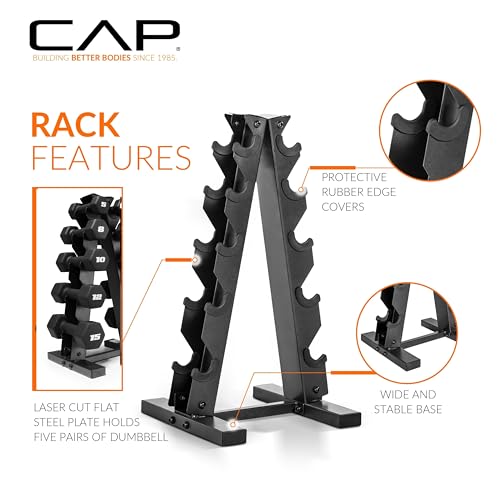
The CAP set solves storage with its A-frame rack, but the listing does not give the rack’s dimensions, so measure once it arrives and plan for a permanent spot. A corner of a spare bedroom or a spot along a garage wall is the usual home for one. In an apartment, think about the floor too: a dumbbell set down hard is louder for the neighbors below than a band, and a mat under your lifting area can protect the floor.
Bands win easily on portability. The whole WSAKOUE set weighs about 2.2 lb per the listing and packs into its bag, so it can live in a desk drawer, ride along in a gym bag, or move from the living room to the backyard. The dumbbells add up to 100 lb before you count the rack. If you travel often, resistance bands for travel are the only half of this comparison that fits in a carry-on.
Durability, Replacement, and Latex
Bands are a wear item. TheraBand’s care page says to inspect a band for damage before and after each use, to not use it if it is torn, punctured, or nicked, and to discard it immediately if you find any of those. It also says not to stretch its bands more than 3 times their resting length and to store them in a cool, dry place out of direct sunlight. Those instructions are TheraBand’s for its own products; follow the manual that comes with your set, and plan to replace bands over time. The WSAKOUE listing says its bands keep their elasticity after years of frequent use, but that is the seller’s claim, and the listing gives a 1-year warranty.
Dumbbells change very little with use. Iron does not lose weight, so the main thing to watch on a coated dumbbell is the coating itself. CAP describes this line as cast iron with a black neoprene coating and hex heads that keep it from rolling when set down.
Latex matters for bands in a way it does not for most dumbbells. The WSAKOUE listing describes the bands as 100% natural latex. MedlinePlus lists rubber bands among common latex products and notes that latex-free versions of many such products exist. If anyone in your home reacts to latex, skip this set and look for bands sold as latex-free, or choose dumbbells.
Safety: Band Snap and Dropped Weights
Each tool has its own way of going wrong. TheraBand’s care page warns that any resistance band can break or slip from its anchoring point during use, tells users not to use a band in a way that could snap it toward the head and eyes, and advises wearing eye protection. In practice that means checking the band and the anchor before every set, keeping your face out of the band’s path, and never anchoring to something that can move, such as a door that opens toward you or a piece of furniture you could pull over.
With dumbbells, the risk is mostly gravity: a weight dropped on a foot, or a pair left on the floor where someone trips. Put them back on the rack between sets, keep the area clear, and keep young children away from both bands and weights while you train. If any exercise causes pain, stop and talk to a qualified professional before continuing.
Who Should Choose Each
- Choose resistance bands if you train in a small apartment or travel often, want pulling movements from different angles, or need help working toward a full pull-up. The WSAKOUE Pull-Up Band Set gives five long loops listed from 5 to 125 lb in one bag, per the listing.
- Choose weights if you want a load you can read and repeat, plan to add weight in small known steps, or are new to strength work and want nothing to anchor. The CAP Neoprene Dumbbell Set with A-Frame Rack gives five pairs from 5 to 15 lb and a rack, per the listing.
- Choose both if you have room for a small rack. Dumbbells cover presses, squats, and rows; a band set adds pull-downs, face pulls, pull-up assistance, and a kit you can take on the road.
- You should look elsewhere if anyone in your home reacts to latex (skip this band set), you already lift more than 15 lb per hand on most exercises (skip this dumbbell set), or your plan centers on heavy squats and deadlifts, which call for heavier dumbbells or a barbell.
These two products are examples, not the only options. When comparing the best resistance bands for your space, look at band type (fabric hip loops, long loops, flat bands) and material before the pound labels. When comparing the best dumbbell set for your space, look at the top weight, the size of each step, and whether a rack is included.
Why You Should Trust Us
We do not conduct our own product trials; our picks draw on published specifications, independent reviews, and Amazon owner ratings, which also set each product’s StrengthRoomLab Score. For this comparison we read both Amazon listings in full, checked CAP’s own product page, and used TheraBand’s published care instructions, the CDC, MedlinePlus, and a peer-reviewed meta-analysis for the general points about bands and weights. Where a listing contradicts itself, we say so. Commissions never affect which products we cover or how we score them. The full method is on our How We Review page.
FAQ
Can resistance bands replace weights?
For many people training at home, they can cover a lot of the same work. The CDC lists both as muscle-strengthening activity, and the meta-analysis cited above found similar strength gains from elastic and conventional resistance. Bands are harder to load heavily for squats and deadlifts, and their pound labels are not comparable to dumbbell pounds, so heavy lower-body work is where weights are hardest to replace.
Are resistance bands as good as weights?
For strength gains, the research summarized above suggests they can be as effective when the training is hard enough, though it pooled a small number of trials. They are not identical tools. Bands are lightest at the start of a rep and heaviest at the end, while a dumbbell weighs the same throughout, and dumbbells are easier to measure and repeat.
Are resistance bands better than weights?
They are better for specific situations: small spaces, travel, pulling from different angles, and pull-up assistance. Weights are better when you want exact, repeatable loads and small steps up. Neither is better for every goal, so pairing a small dumbbell set with a band set is worth considering if you have the room.
Can you use resistance bands and dumbbells together?
Yes. A simple split is dumbbells for presses, squats, and rows, and bands for pull-downs, face pulls, or pull-up assistance in the same session. Whatever you combine, follow the band maker’s anchoring and stretch limits, and keep the dumbbells on the rack while you use the bands so nothing is underfoot.
How do you track progress with bands compared with dumbbells?
With dumbbells, write down the weight and reps. With bands, write down the band color, how many bands you used, and how far you stood from the anchor or how wide your stance was, since stretch changes tension. Without those notes, two sessions with the “same” band may not be the same workout.
Final Verdict
Pick by space, load, and how you like to measure. If your home gym is a corner of a bedroom, a closet shelf, or a suitcase, a long-loop band set like the WSAKOUE kit gives you real resistance and pulling options in about 2 lb of gear. If you have room for a rack and want numbers you can read and repeat, a fixed dumbbell set like the CAP neoprene pairs is the simpler place to start, as long as 15 lb per hand is enough for now. Adding the other tool later is easy once you know which movements you use most. Browse our resistance bands category for more options we have researched.
About the author
Sean Freeman has maintained a home fitness routine for five years, combining daily walking, recreational running, and resistance band and mobility exercises. Over the past two years, Sean has researched and written about compact fitness equipment, focusing on storage, ease of use, and suitability for smaller living spaces. Sean covers walking pads, gym flooring, and resistance bands, helping readers build practical spaces for everyday exercise.