
The Best Pull-Up Bars: 5 Doorway and Wall-Mounted Picks for Home
The 5 best pull-up bars for a home gym, from a stud-mounted wall bar to no-drill doorway bars, compared on fit, capacity, and grips.


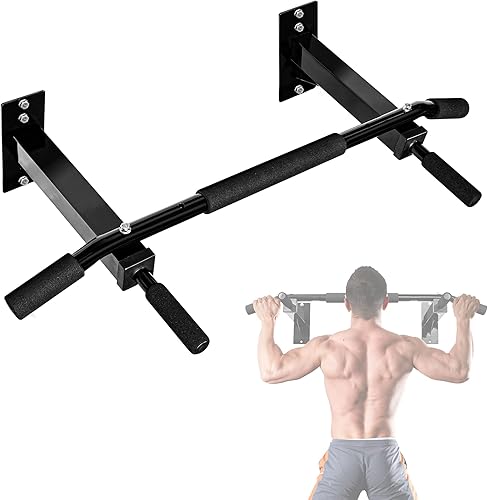
The best pull up bar for your home depends on what you can mount it to. If you have a wall with studs you can drill into, the Yes4All Wall Mount Chin-Up Bar bolts to the wall, leaves every doorway free, and does not rely on the condition of your door trim; Yes4All designs it for 16 and 24 in stud spacing and rates it for 300 lb. If you rent, cannot drill, or want a bar that comes down after each session, the four doorway bars below cover those situations, from slip-over designs to a pressure-lock bar. No bar in this roundup earned a Best Overall award, and How We Chose explains why.
We ranked these bars on criteria you can check before you order: how the bar mounts (wall bolts, leverage over the trim, pressure, or brackets), the doorway width and frame depth it accepts, its rated capacity, the grip positions it offers, and how closely each Amazon listing agrees with the maker’s own product page. Where a listing and the maker disagree, we use the maker’s figure and say so. Where neither source gives a figure, the table says “Not confirmed.”
This guide is general product information, not medical or fitness advice. If you have pain, an injury, or a health condition, talk to a qualified healthcare professional before starting a new exercise routine.
We earn a commission from qualifying purchases made through links on this page. Commissions never affect our rankings or StrengthRoomLab Scores.
Our Picks for the Best Pull-Up Bar
- Best Wall-Mounted Bar: Yes4All Wall Mount Chin-Up Bar. The only wall-mounted bar here, designed for 16 and 24 in stud spacing and rated for 300 lb per Yes4All, so it leaves the doorway free. We cover the Standard option in black, not the multifunctional option sold on the same listing.
- Most Grip Positions: ProsourceFit Multi-Grip Pull-Up Bar. ProsourceFit lists 12 foam grips, the highest grip count in this roundup, on a bar that slips over the frame without screws.
- Best for Shallow Door Trim: Yes4All Elite Doorway Pull-Up Bar. Per the listing, a J-hook mount handles trim shallower than 13/16 in, an option no other doorway bar here lists.
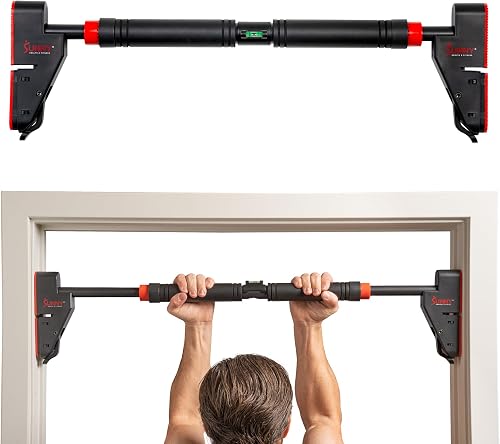
- Highest Rated Capacity: Sunny Health & Fitness Adjustable Doorway Pull-Up Bar. Sunny rates it for 330 lb, the highest figure in this roundup, on a pressure-lock bar that needs no drilling.
Pull-Up Bar Comparison Table
Figures come from the maker’s product page when we could open one, and from the Amazon listing otherwise. The source is noted in each cell. Doorway width is the inside width of the opening the bar spans; frame depth is the thickness of the wall or jamb the bar hooks over.
| Bar | Mount type | Doorway width or stud spacing | Frame depth | Rated capacity | Install hardware | Grips | Bar weight |
|---|---|---|---|---|---|---|---|
| Yes4All Wall Mount (Standard option) | Wall, bolted to studs | 16 or 24 in stud spacing (Yes4All) | Not applicable | 300 lb (Yes4All) | Mounting hardware included (listing) | Foam-padded, multiple positions; count Not confirmed | 8.3 lb (listing) |
| ProsourceFit Multi-Grip | Doorway, slips over the frame | 24 to 36 in (ProsourceFit) | Up to 6 in (ProsourceFit) | 300 lb (ProsourceFit) | No screws; 2 optional foam covers protect the frame (ProsourceFit) | 12 foam grips (ProsourceFit) | Not confirmed |
| Yes4All Elite Doorway | Doorway, no screws on trim deeper than 13/16 in (listing) | 30 to 38 in (listing) | 4.74 to 6.25 in (listing) | 300 lb (listing) | J-hook mount required on trim under 13/16 in (listing) | NBR foam handles; count Not confirmed | Not confirmed |
| Sunny Health & Fitness Adjustable Doorway | Doorway, pressure-lock | 28 to 38 in (Sunny) | Not confirmed | 330 lb (Sunny) | No screws or drilling (Sunny) | Foam handles: neutral, wide, reverse (listing) | 4.6 lb (Sunny); the listing says 4.9 lb |
| CAP Doorway Chin-Up | Doorway, bracket mount | 24.5 to 36 in (CAP); the listing says 24.75 to 36.5 in | Not confirmed | 220 lb (CAP) | Weight-bearing and non-weight-bearing brackets (CAP); screws Not confirmed | Padded foam handles (listing) | 2.9 lb (listing) |
Our ranking reflects our overall assessment of specifications, maker information, and owner reviews. The StrengthRoomLab Score is a separate measure based on Amazon customer ratings with a limited editorial adjustment, and it does not set the order.
| Award | Product | StrengthRoomLab Score About StrengthRoomLab ScoreThe StrengthRoomLab Score is our own rating out of 10. It starts from the average Amazon customer rating, may be adjusted by the editor by up to 0.5 points, and is never influenced by brands, retailers, or affiliate commissions. Learn more › | |
|---|---|---|---|
| Best Wall-Mounted Bar |
 Yes4All Wall Mount Chin-Up Bar |
8.1/10 | Buy |
| Most Grip Positions |
 ProsourceFit Multi-Grip Pull-Up Bar |
8.1/10 | Buy |
| Best for Shallow Door Trim |
 Yes4All Elite Doorway Pull-Up Bar |
8.3/10 | Buy |
| Highest Rated Capacity |
 Sunny Health & Fitness Adjustable Doorway Pull-Up Bar |
8.0/10 | Buy |
 CAP Doorway Chin-Up Bar |
7.6/10 | Buy |
Yes4All Wall Mount Chin-Up Bar
A good fit for a garage or basement wall where you can bolt into studs and leave the bar up permanently. According to the Amazon listing, it is heavy gauge steel with a black powder coat, is designed for 16 and 24 in stud spacing, holds up to 300 lb, and ships with mounting hardware and foam-padded grips. Yes4All's own product page repeats the stud spacing and the 300 lb figure. These details cover the Standard option in black; the same listing also sells a different multifunctional model with a dip bar, so check the option before you order. Look elsewhere if you rent, cannot locate studs, or need to take the bar down after each workout.
Pros
- Only wall-mounted bar in this roundup
- Designed for 16 and 24 in stud spacing per Yes4All
- Leaves the doorway free once installed
Cons
- Permanent install with holes in the wall
- Heaviest of the bars with a listed weight at 8.3 lb per the listing
ProsourceFit Multi-Grip Pull-Up Bar
A good fit for someone who wants several hand positions and a bar that lifts off the door when the session is over. According to the Amazon listing, it slips over standard doorways from 24 to 36 in wide and up to 6 in thick, holds up to 300 lb, and has 12 grips, two of them optional foam covers that protect the frame. ProsourceFit's product page lists the same width, depth, capacity, and grip count. Look elsewhere if your door has no trim or molding for the bar to sit against, or if your doorway is wider than 36 in.
Pros
- Twelve grips, the highest grip count listed in this roundup
- No screws needed per the listing and ProsourceFit
- Limited lifetime warranty per the listing
Cons
- Bulky frame to store compared with a straight bar
- Width range stops at 36 in per ProsourceFit
Yes4All Elite Doorway Pull-Up Bar
A good fit for a doorway with shallow trim, where many no-screw bars have nothing to hook onto. The listing title calls it a wall-mounted bar, but the bullets and the mounting field describe a doorway bar that fits openings from 30 to 38 in wide and frames from 4.74 to 6.25 in thick, rated for 300 lb. Per the listing, no screws are needed when the trim is deeper than 13/16 in, and shallower trim requires the J-hook mount. Look elsewhere if your doorway is narrower than 30 in, the highest minimum width among the doorway bars in this roundup.
Pros
- J-hook mount option for shallow trim per the listing
- Frame thickness range of 4.74 to 6.25 in is stated
- TPR spacers and padding to protect the frame per the listing
Cons
- Listing title and description disagree on the mount type
- Needs a doorway at least 30 in wide
Sunny Health & Fitness Adjustable Doorway Pull-Up Bar
A good fit for an apartment where drilling is off the table and the bar needs to move between rooms. According to the Amazon listing, it is a pressure-lock bar for doorways from 28 to 38 in wide with an anti-rotation lock, side markers for even setup, and foam handles for neutral, wide, and reverse grips. Sunny's product page lists a 330 lb capacity, says it needs a rigid, load-bearing doorway frame, and says it is built for bodyweight training, not kipping or swinging. Look elsewhere if you train kipping or other dynamic movements.
Pros
- Highest rated capacity in this roundup at 330 lb per Sunny
- No screws or drilling per the listing and Sunny
- Anti-rotation lock and alignment markers per the listing
Cons
- Not for kipping or swinging per Sunny
- Depends on a rigid door frame to hold its position
CAP Doorway Chin-Up Bar
A good fit for a lighter user who wants a simple straight bar with padded handles and a floor-anchor mode for sit-ups. CAP's product page lists a 220 lb maximum capacity and a width adjustment of 24.5 to 36 in, while the Amazon listing gives 24.75 to 36.5 in, so measure against the smaller range. Per the listing, it uses weight-bearing brackets for pull-ups and separate non-weight-bearing brackets for floor work. Look elsewhere if you weigh close to 220 lb or plan to add a weight vest.
Pros
- Lightest of the bars with a listed weight at 2.9 lb per the listing
- Separate brackets for pull-ups and floor work
- Padded foam handles per the listing
Cons
- Lowest capacity in this roundup at 220 lb
- Listing width range differs from CAP's product page
How We Chose
This roundup is research-based. We did not use these bars ourselves. We read each Amazon listing in full, including the bullets, the description, and the specification table, then compared those figures with the maker’s product pages wherever we could open them. Every bar had to be sold new on Amazon in the US, come from a brand we have vetted, clear a minimum average owner rating and a minimum number of owner ratings, and actually be a pull-up bar. Our first shortlist also pulled in a power rack with a built-in pull-up bar; we removed it because a rack is a different purchase with different space needs, and the same logic keeps power towers and dip stations out of this list. We capped each brand at three products. The full method is on our How We Review page.
Our shortlist also included the JFIT Deluxe Doorway Pull-Up Bar. When we checked its Amazon listing again before publication, it showed the bar as currently unavailable with no seller, so it no longer met the rule that every pick must be sold new on Amazon in the US, and we removed it.
This roundup has no Best Overall. That award goes only to a bar from a vetted brand that clears our minimums for average owner rating and number of owner ratings on ratings that belong to that bar alone, from a maker whose own page confirms the model. No bar here meets all of that. The Amazon listings for the Yes4All Wall Mount and the ProsourceFit each share their owner ratings with a different model, so those ratings do not describe either bar on its own. The Sunny and the CAP fall below the minimum average rating for the award. For the Yes4All Elite, we could not find a Yes4All product page for that model, so we could not confirm that it is still in production. Instead of naming a winner on incomplete evidence, each bar above carries an award tied to a spec it leads on, and the list opens with the Yes4All Wall Mount because it is the only bar here that does not depend on a door frame.
One note on the Yes4All Wall Mount: its Amazon listing also sells a multifunctional option, a different design with a dip bar and back and arm pads that the listing rates for 515 lb. The bar we cover and link to is the Standard option in black, rated for 300 lb, and every figure for it in this roundup refers to that version.
The StrengthRoomLab Score on each product card does not set the order. That score starts from the average owner rating and can move up or down by up to half a point for documented issues, and three bars carry a small deduction. The Yes4All Wall Mount’s and the ProsourceFit’s reflect the shared ratings. The CAP Doorway Chin-Up Bar’s reflects a width mismatch: its Amazon listing gives a range of 24.75 to 36.5 in, while CAP’s product page lists 24.5 to 36 in. The CAP also has no award above: its 220 lb rating is the lowest here, and none of its specs leads the group.
Best Doorway Pull-Up Bars
Four of the five bars above mount in a doorway. There is no single best doorway pull up bar for every home, because what your door frame can support matters more than any single spec. This table sorts the four by what each one asks of the frame.
| Doorway bar | How it holds | Screws in the frame | Opening width | Rated capacity | Grips | Floor exercises |
|---|---|---|---|---|---|---|
| ProsourceFit Multi-Grip | Slips over the frame | None (ProsourceFit) | 24 to 36 in (ProsourceFit) | 300 lb (ProsourceFit) | 12 grips (ProsourceFit) | Sit-ups, push-ups, dips (listing) |
| Yes4All Elite Doorway | Slips over the frame | None on trim deeper than 13/16 in; J-hook mount for shallower trim (listing) | 30 to 38 in (listing) | 300 lb (listing) | Foam handles; count Not confirmed | Not confirmed |
| Sunny Health & Fitness Adjustable Doorway | Pressure between the jambs | None (Sunny) | 28 to 38 in (Sunny) | 330 lb (Sunny) | Neutral, wide, reverse (listing) | Not confirmed |
| CAP Doorway Chin-Up | Weight-bearing brackets | Not confirmed | 24.5 to 36 in (CAP); listing: 24.75 to 36.5 in | 220 lb (CAP) | Padded foam handles (listing) | Foot anchor bracket (listing) |
Take the width and depth measurements described under “Measure the doorway before you order” below, then let the jamb decide. If drilling is off the table, choose between the two slip-over bars, which need solid trim to brace against, and the Sunny, which Sunny says needs a rigid, load-bearing frame. For the widest range of hand positions, the ProsourceFit leads with 12 grips; for the most headroom on capacity, the Sunny leads at 330 lb. Only the Yes4All Elite lists a fallback for shallow trim. The CAP suits a lighter user who wants a plain bar that also anchors feet for sit-ups, but at 220 lb it leaves the least headroom, and neither CAP’s page nor the listing says whether its brackets need screws, so ask CAP before you count on a no-drill install.
Skip a doorway bar in these cases:
- A frame that flexes or hollow, loose trim. See “Check the frame and the trim” below; consider a wall mount on studs instead.
- Shallow trim and a no-holes lease. The Yes4All Elite needs its J-hook mount installed on trim under 13/16 in, and the CAP’s bracket hardware is Not confirmed.
- Kipping or swinging. Sunny rules these out, and none of the four Amazon listings says they are allowed.
- Tall users who want a full dead hang. A doorway bar sits at the top of the opening, so you may have to bend your knees to clear the floor. A wall-mounted bar can go higher.
How to Choose the Best Pull Up Bar for Your Home
Pick the mount type first
How a bar attaches decides where it can go and how much work it takes to put up. The five bars here fall into four groups.
- Wall-mounted bars, like the Yes4All Wall Mount, bolt into wall studs and stay up. They free the doorway entirely and do not depend on door trim, but the install is permanent.
- Slip-over doorway bars, like the ProsourceFit and the Yes4All Elite, hook over the top of the frame and brace against the wall on the other side. No screws are needed in most doorways, and the bar lifts off when you are done.
- Pressure-lock doorway bars, like the Sunny, expand between the two sides of the opening and hold by pressure. They are the easiest to move from room to room, and Sunny says its bar needs a rigid, load-bearing doorway frame.
- Bracket doorway bars, like the CAP, rest in brackets at the door frame. CAP lists weight-bearing brackets for pull-ups and separate non-weight-bearing brackets for floor work, but neither CAP’s page nor the listing says whether the brackets need screws, so confirm the hardware before you buy if your lease rules out holes.
A ceiling mounted pull up bar or a free standing pull up bar solves other problems, such as a room with no usable doorway or a garage with exposed joists. None of the bars in this roundup is one of those types, so look for a model built for that mount if it fits your space better.
Measure the doorway before you order
Not every doorway works with every bar, and a doorway pull up bar only holds as well as the opening it spans. Before you assume you can use a pull up bar on any door, measure the inside width of the opening from jamb to jamb, then compare it with the ranges in the table.
The ranges differ more than you might expect. A narrow 26 in closet opening fits the ProsourceFit (from 24 in) and the CAP (from 24.5 in per CAP), but not the Sunny, which starts at 28 in, or the Yes4All Elite, which starts at 30 in. At the other end, a 37 in opening is too wide for the ProsourceFit and the CAP, which stop at 36 in per their makers, but fits the Sunny and the Yes4All Elite, which reach 38 in. Above 38 in, none of the doorway bars here fits, and a wall mount is the alternative. If your doorway sits near the edge of a range, pick a bar whose range clears it with some room to spare.
For slip-over bars, frame depth matters as much as width. ProsourceFit lists a maximum frame thickness of 6 in, and the Yes4All Elite listing gives a range of 4.74 to 6.25 in. Measure the wall from the face of the trim on one side to the face of the wall on the other. Walls in some older houses are thicker than that, so measure rather than assume.
Check the frame and the trim
Slip-over bars rely on the door trim, and pressure bars rely on the jambs. If the trim is thin, loose, or missing, a no-screw bar has less to brace against. The Yes4All Elite listing addresses this directly: no screws are needed when the trim is deeper than 13/16 in, and shallower trim requires the J-hook mount. Measure how far the trim stands out from the wall before you choose.
Pressure bars need solid sides. Sunny’s product page for its adjustable bar says it requires a rigid, load-bearing doorway frame and solid, flat contact surfaces on both sides. Hollow trim pieces, decorative molding, and doorways with gaps behind the jamb are poor candidates. Metal door frames are a separate case: none of the maker pages we read for these four doorway bars mentions metal frames, so contact the maker before mounting one on metal.
Read the weight capacity with a margin
Rated capacities in this roundup run from 220 lb (CAP) through 300 lb (ProsourceFit and both Yes4All bars) to 330 lb (Sunny). Count everything that hangs from the bar: your body weight plus anything you wear. A 190 lb user in a 20 lb weight vest puts 210 lb on the bar, which is close to the CAP’s limit and comfortably inside the others. If you plan to add load over time, start with one of the higher-rated bars.
A rating also assumes the bar is used as the maker intends. Sunny says its bar is built for bodyweight training, not kipping, swinging, or dynamic gymnastics movements, and that attachments such as resistance bands should pull straight down, not to the side. A bar that holds a slow, controlled pull-up can behave differently under a swinging load, so read the maker’s use limits along with the number.
Plan for a wall mount if you have studs and space
A wall mounted pull up bar makes sense in a garage, basement, or spare room where it can stay up for good. Yes4All’s page for its wall mount bar says it is designed for 16 and 24 in stud space and supports up to 300 lb. On Amazon, pick the Standard option; the multifunctional option on the same listing is a different bar with different mounting needs. Before you install a pull up bar on a wall, use a stud finder to confirm the spacing, and follow the included instructions for fasteners and placement. The listing does not say the bar is meant for concrete or block walls, so treat those as Not confirmed and contact Yes4All before you plan on them.
Height and clearance matter more than the bar itself. Before you drill, hang a tape measure from the planned height and check that you can pull your chin over the bar without hitting the ceiling, and that your feet clear the floor at the bottom of each rep. In a garage, leave room to walk past without catching a shoulder on the bar.
Compare grips and hand positions
Grip options decide which variations you can do. ProsourceFit lists 12 foam grips, including two optional covers that protect the door frame, and the listing describes wide, hammer, and close-grip work. The Sunny listing describes foam handles for neutral, wide, and reverse grips. The Yes4All Wall Mount listing describes foam-padded grips in multiple positions without giving a count. A straight bar with fewer positions still handles standard pull-ups and chin-ups; extra positions mainly add variety and let you use a neutral grip if that is more comfortable for your shoulders and wrists.
Think about storage and moving the bar
If you want a portable pull up bar that comes down every evening, a slip-over or pressure bar is the practical choice. The ProsourceFit and Yes4All Elite lift off the frame, and the Sunny listing mentions side markers that help you set it up evenly again in the same or a different doorway. The Yes4All Wall Mount does not move once it is up. For a small pull up bar for apartment use, check your lease before drilling and favor a bar that leaves no holes.
Check before every session, and check for recalls
Doorway bars can shift, and grips can wear. Before each session, confirm the bar is seated the way the maker’s instructions describe, then apply your weight gradually before you lift your feet. Inspect handles too: in a CPSC recall of a doorway pull-up bar from another brand, the plastic handle could crack, posing a fall injury hazard. When we checked the CPSC’s downloadable recall list for this review, it showed no recalls under ProsourceFit, Yes4All, Sunny Health & Fitness, or CAP Barbell. Recalls can be added at any time, so search the list for your model before you install it. If a bar bends, slips, or a bracket loosens, stop using it and contact the maker.
Who Should Look Elsewhere
- Kipping and dynamic training. Sunny rules out kipping and swinging on its pressure bar. If those movements are part of your program, look for a bar whose maker explicitly allows them, and read the use limits before you buy.
- Heavy users and weighted pull-ups. The highest rating here is 330 lb, and the CAP stops at 220 lb. If your body weight plus added load approaches those numbers, choose a different class of equipment.
- Renters who cannot drill. Skip the Yes4All Wall Mount, which bolts into studs. The ProsourceFit, the Sunny, and the Yes4All Elite on deeper trim need no screws per their makers or listings.
- Doorways outside every range. Openings under 24 in or over 38 in fall outside all four doorway bars here. Unusual frames, such as very thick walls or trim that is loose or hollow, also rule out the slip-over and pressure designs.
- Anyone who wants a full strength station. A power rack or power tower adds dips, barbell storage, or squats, but needs far more floor space. That is a separate purchase, and none of those are covered here.
FAQ
What is the best pull up bar for home use?
It depends on your walls, your doorways, and whether you can drill. If you can bolt into studs and want the doorway free, a wall-mounted bar such as the Yes4All Wall Mount stays up for good; Yes4All rates it for 300 lb and designs it for 16 and 24 in stud spacing. If you cannot drill, a slip-over bar such as the ProsourceFit lifts off after each session, and a pressure-lock bar such as the Sunny moves between rooms, with a 330 lb rating from Sunny. Measure first: the doorway bars here cover openings from 24 to 38 in between them, but each one fits only part of that range.
Do pull-up bars damage door frames?
They can, depending on the design and the frame. Bars that mount with screws leave small holes where the hardware attaches. Slip-over and pressure bars leave no holes, and most add padding to reduce marks: ProsourceFit includes two optional foam covers for the frame, the Yes4All Elite listing describes thick padding and two TPR spacers, and the Sunny listing mentions padded support sleeves. Weak or loose trim can still be damaged by a slip-over bar, so check the trim first. A wall-mounted bar avoids the door frame altogether but leaves bolt holes in the wall.
How much weight can a doorway pull-up bar hold?
It depends on the model and on your door frame. The doorway bars here are rated from 220 lb (CAP) to 330 lb (Sunny), with ProsourceFit and the Yes4All Elite at 300 lb. Those ratings assume the bar is installed as the maker describes on a frame in good condition, so a weak frame lowers the real limit.
Is a do-it-yourself pull-up bar a good idea?
A homemade bar has no published capacity, and its strength depends on materials, fasteners, and what it is anchored to. A commercial bar gives you a rated load and installation instructions to follow. If you do build your own, have a qualified contractor confirm the anchoring, and never rely on a closet rod, shelf bracket, or towel bar that was not designed to hold a person.
How can you do pull-ups without a pull-up bar?
You need something rated to hold your weight, such as a bar at a gym or a park, or a pull-up station on a power rack. Avoid doors, door tops, railings, and household fixtures, since none of them carries a rated load for hanging. Until you have a bar, a resistance band anchored at a low point lets you practice rows and other pulling movements without hanging.
Final Thoughts
- Best Wall-Mounted Bar: Yes4All Wall Mount Chin-Up Bar. A 300 lb bar (Standard option) for 16 or 24 in stud spacing that leaves the doorway free.
- Most Grip Positions: ProsourceFit Multi-Grip Pull-Up Bar. Twelve grips on a no-screw, slip-over frame.
- Best for Shallow Door Trim: Yes4All Elite Doorway Pull-Up Bar. A J-hook mount for trim under 13/16 in.
- Highest Rated Capacity: Sunny Health & Fitness Adjustable Doorway Pull-Up Bar. A 330 lb pressure-lock bar that needs no drilling.
Start with the doorway or wall you actually have: measure the opening, the frame depth, and the trim, then pick the mount type that fits. No single bar here suits every home, which is why this roundup has no Best Overall. If you can drill into studs, the Yes4All Wall Mount frees the doorway; if you need a doorway bar that leaves no holes, the ProsourceFit and the Sunny are the place to start. Read the maker’s instructions and use limits for the exact model before you install it, and check the bar before each session. For more options, browse our full list of pull-up bars.
About the author
Julio Frazier has spent six years training with free weights, combining gym-based strength workouts with kettlebell and bodyweight sessions at home. With two years of experience writing fitness equipment buying guides, Julio researches product specifications, owner feedback, and equipment suitability for different training routines. Julio covers dumbbells, weight benches, kettlebells, and pull-up bars.